
ECEGEN Genetic Services
Molecular Cytogenetics
Detection of microdeletions and translocations using FISH, aCGH, and NGS methods.
This technique combines molecular biology and cytogenetic methods to perform chromosome analysis. It is based on identifying structural and numerical abnormalities in chromosomes and assessing their impact on inheritance. Mutations such as microdeletions and translocations, which cannot be identified by conventional cytogenetics, can be detected through molecular cytogenetics. Fluorescence In Situ Hybridization (FISH), array Comparative Genomic Hybridization (aCGH), and Next Generation Sequencing (NGS) are widely used molecular cytogenetic methods.
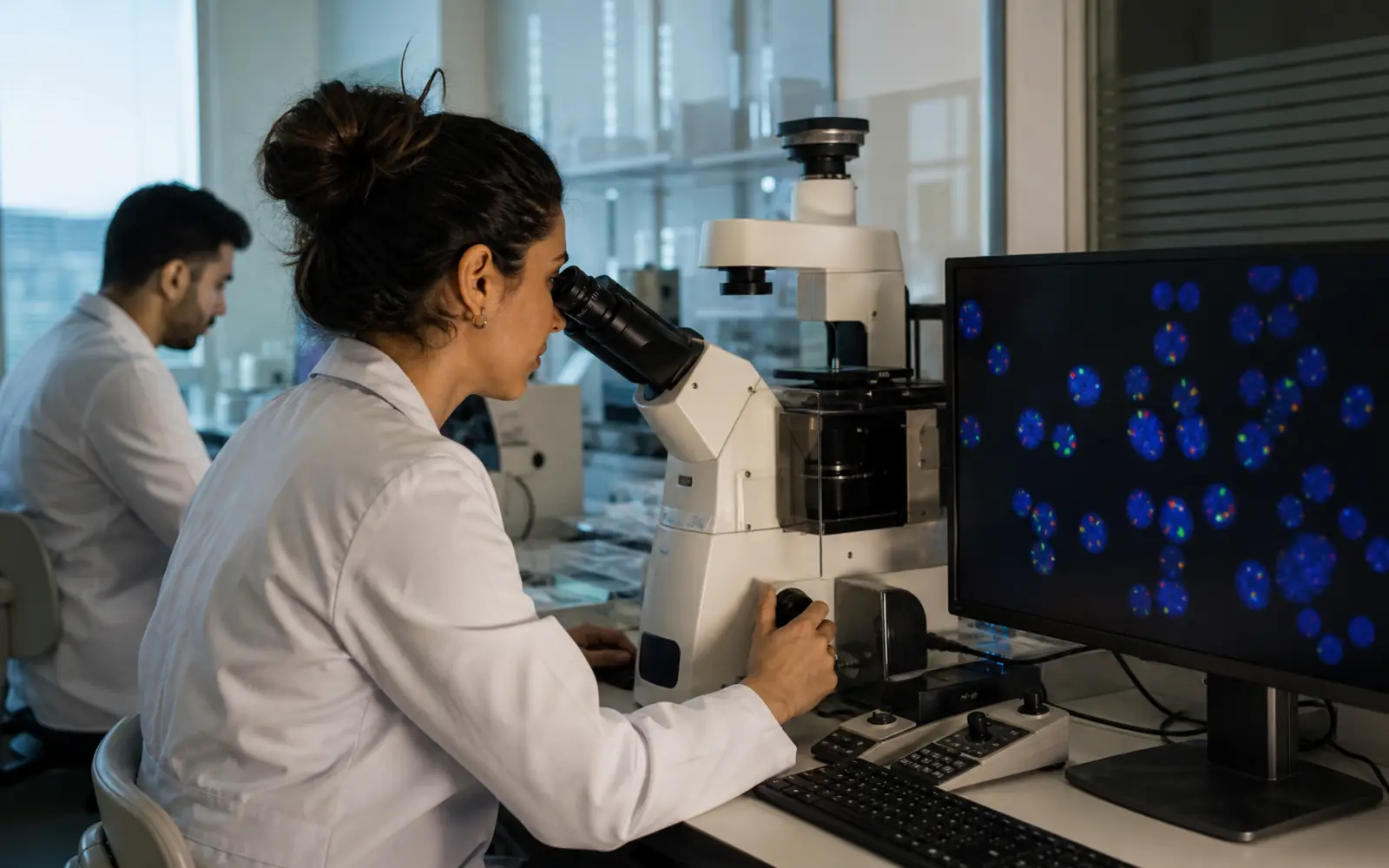
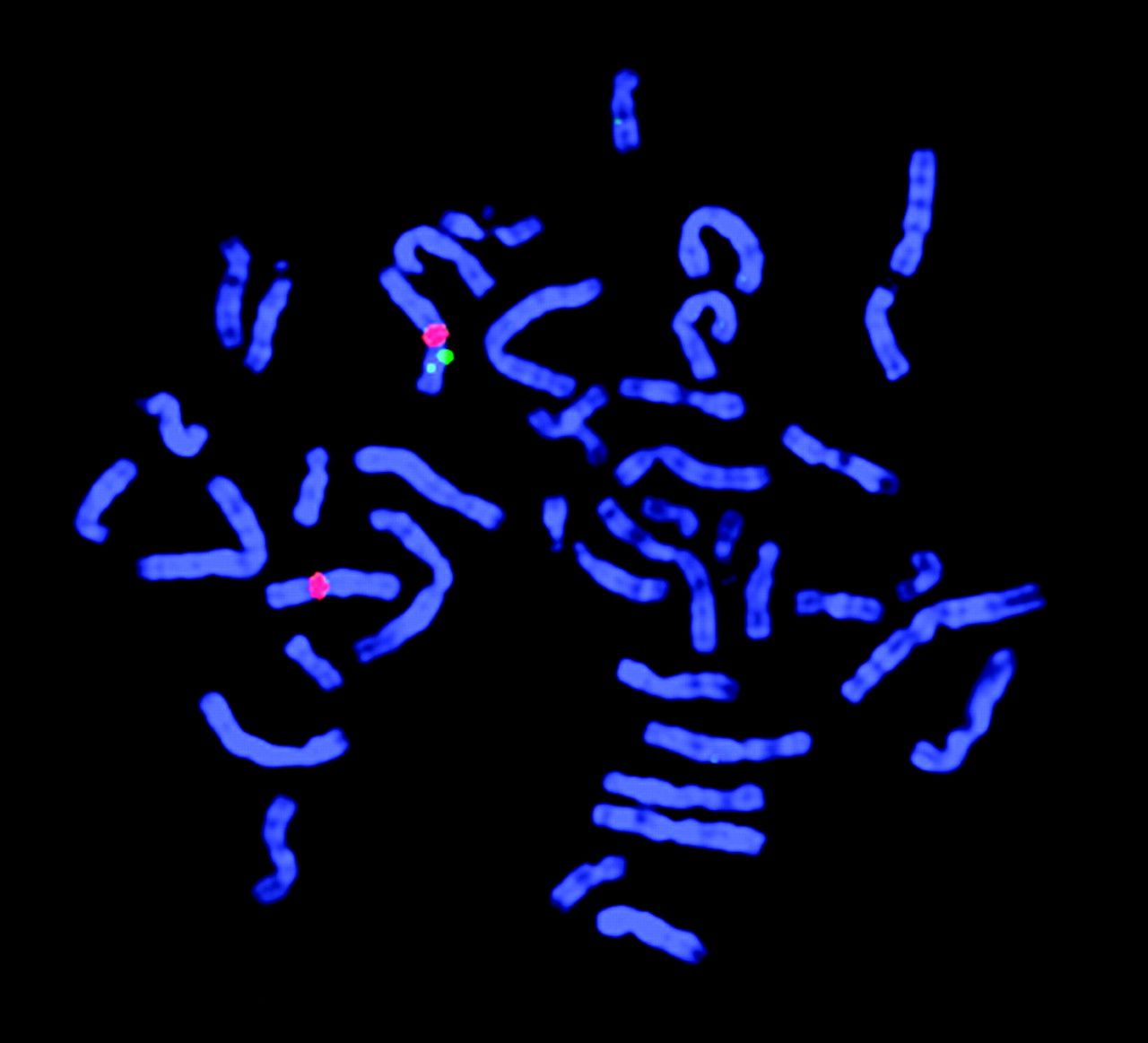
Fluorescence in situ hybridization (FISH) is used to examine the presence or absence of a specific DNA sequence, or to assess the number of copies of a chromosome or chromosomal region.
Molecular Cytogenetic Test Indications
- Microdeletion syndromes
- Detailed characterization of changes observed in routine cytogenetic examinations
- Hematologic cancers
- Genetic examinations of cancer tissue or biopsy material
- Rapid aneuploidy screening by FISH (chromosomes 13, 18, 21, X, and Y) from amniotic fluid, CVS, bone marrow, and peripheral blood
- Structural and numerical abnormalities not detectable by conventional chromosome analysis
Would you like to get information about this service or request a test?