
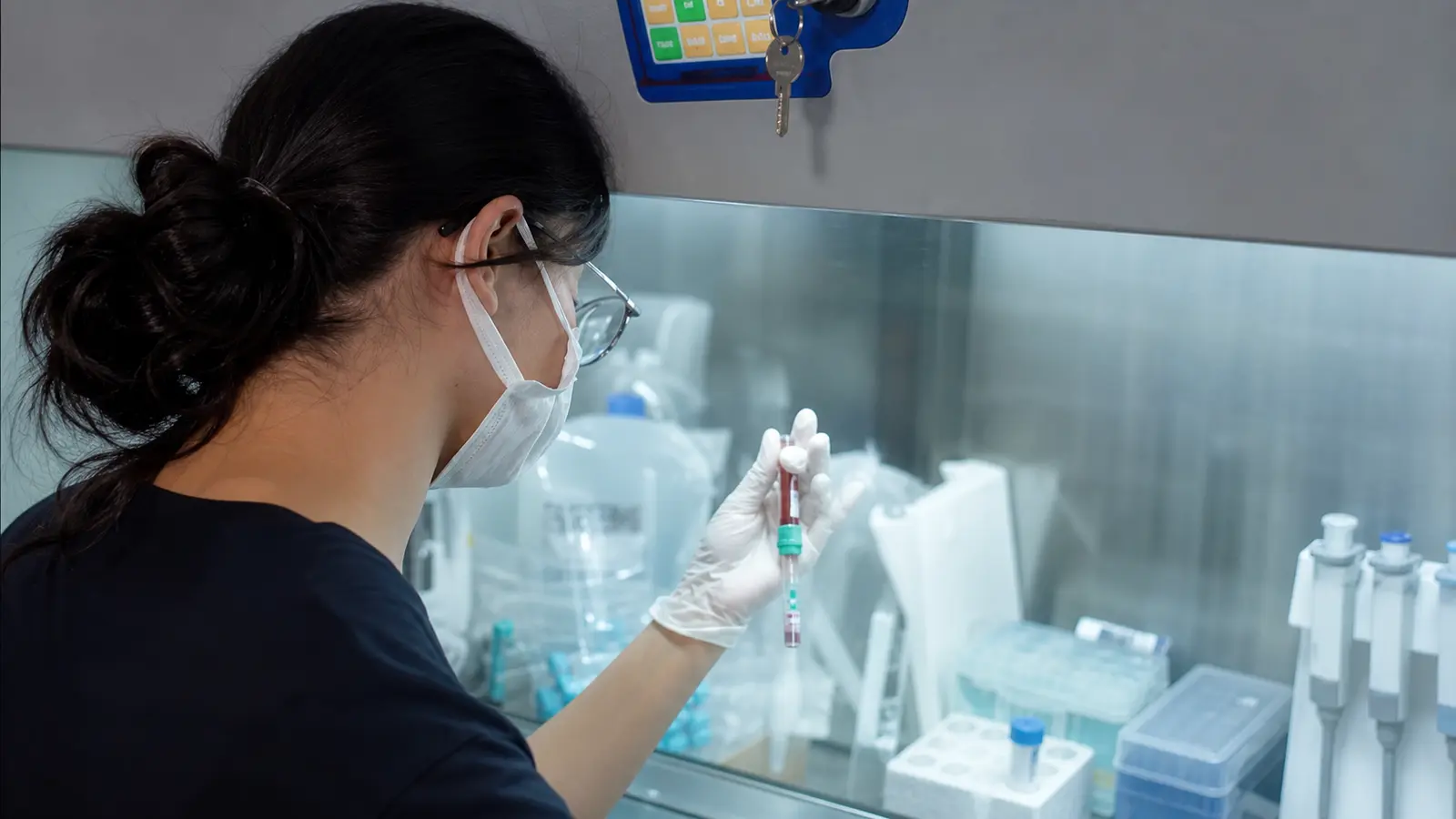
Cytogenetic investigation remains one of the fundamental and indispensable diagnostic pillars of clinical genetics for elucidating numerical and structural chromosome irregularities. At the ECEGEN Genetic Diseases Evaluation Center Cytogenetics Laboratory, all prenatal, postnatal, and hemato-oncological specimens are handled under stringent biosafety and sterility protocols.
Cell Culture in Sterile Biosafety Cabinets
Culturing viable cells from peripheral blood, bone marrow, amniotic fluid, and chorionic villus samples (CVS) is performed strictly within Class II biosafety cabinets under sterile airflow. The cell suspensions prepared by our experienced laboratory specialists are incubated under precise temperature and CO₂ conditions to support synchronized cell division.
Metaphase Chromosome Spreading and GTG-Banding
Following the incubation period, cell division is arrested at metaphase, proceeding immediately to harvest, fixation, and slide spreading. Slides are stained using high-resolution GTG-banding (G-banding). With automated karyotyping microscopes and imaging software, each chromosome pair is classified in accordance with ISCN (International System for Human Cytogenomic Nomenclature) guidelines to screen for deletions, duplications, translocations, and inversions.
Molecular Cytogenetics: FISH and Microarray Integration
For microdeletions and subtelomeric rearrangements extending beyond the optical resolution of conventional karyotyping, Fluorescence In Situ Hybridization (FISH) and Chromosomal Microarray (aCGH) assays provide high-resolution validation. This integrated diagnostic pipeline delivers definitive answers for recurrent pregnancy loss, reproductive difficulties, developmental delay, and hematological malignancies.