
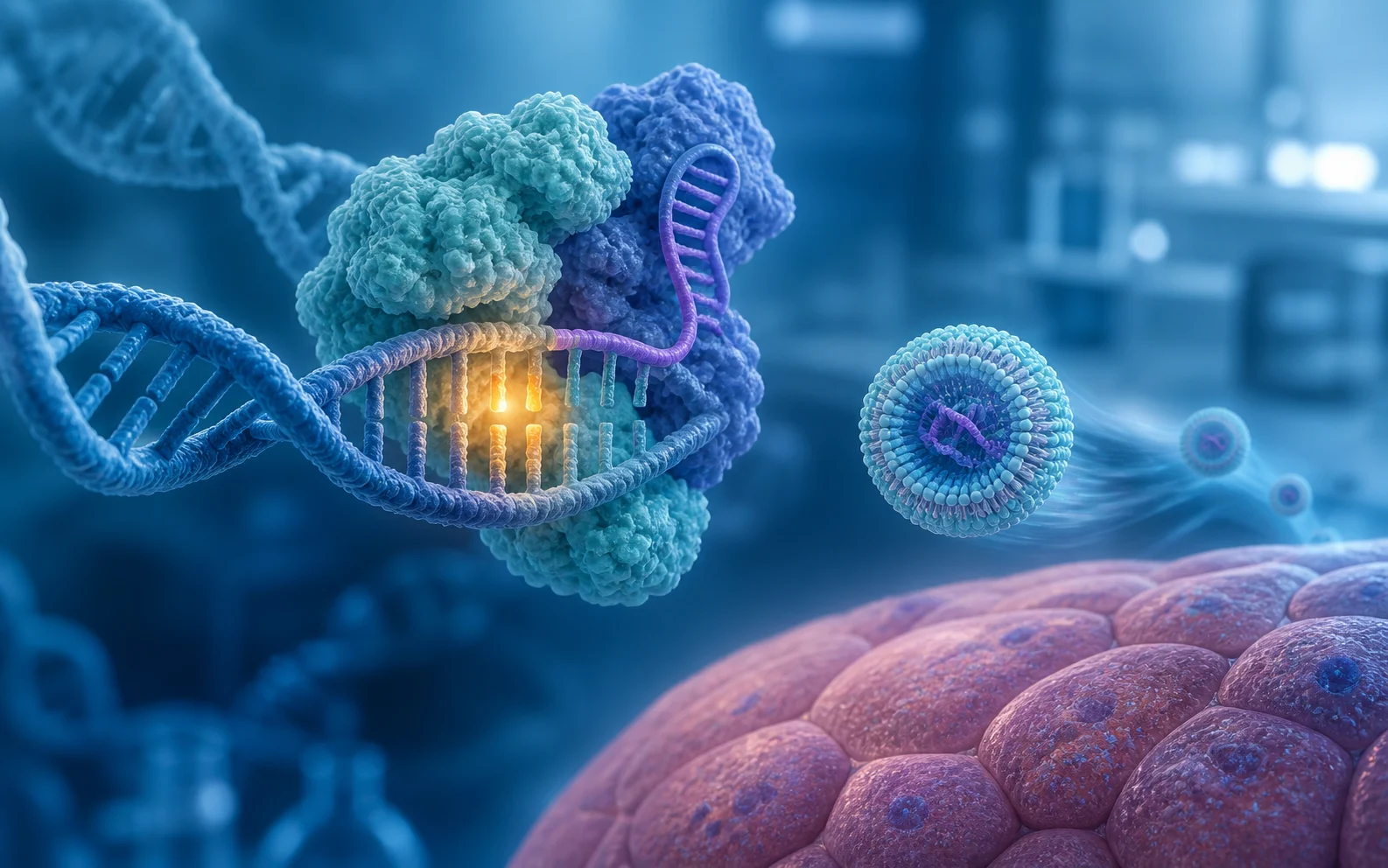
In 2025, researchers reported treating a baby born with CPS1 deficiency, an extremely rare and life-threatening metabolic disorder, with a personalized CRISPR therapy. In this condition, the liver cannot adequately remove toxic ammonia produced when proteins are broken down.
How Was the Treatment Personalized?
The team first identified the DNA change responsible for the baby's disease. Instead of making a conventional CRISPR cut, they designed a base editor that targets a single DNA letter. Messenger RNA for the editor and a guide RNA were delivered to liver cells using lipid nanoparticles. About six months passed from diagnosis to the first treatment.
What Did the Early Results Show?
During early follow-up, the baby was able to consume more protein and reduce the dose of some medicines used to control ammonia. No serious treatment-related adverse effect was reported during the published period. These are meaningful signals, but the evidence comes from one patient with limited follow-up.
Why Does It Matter?
The striking feature is not only the editing technology. Diagnosis, molecular design, manufacturing, and regulatory review were brought together rapidly for one person. The model could offer a development path for other ultra-rare disorders, but every variant would still require its own scientific validation.
The Role of Genetic Diagnosis
Designing the treatment depended on identifying the disease-causing change precisely. The case illustrates how rapid genomic diagnosis can do more than name a rare disorder—it may also open the door to research-based treatment options.