
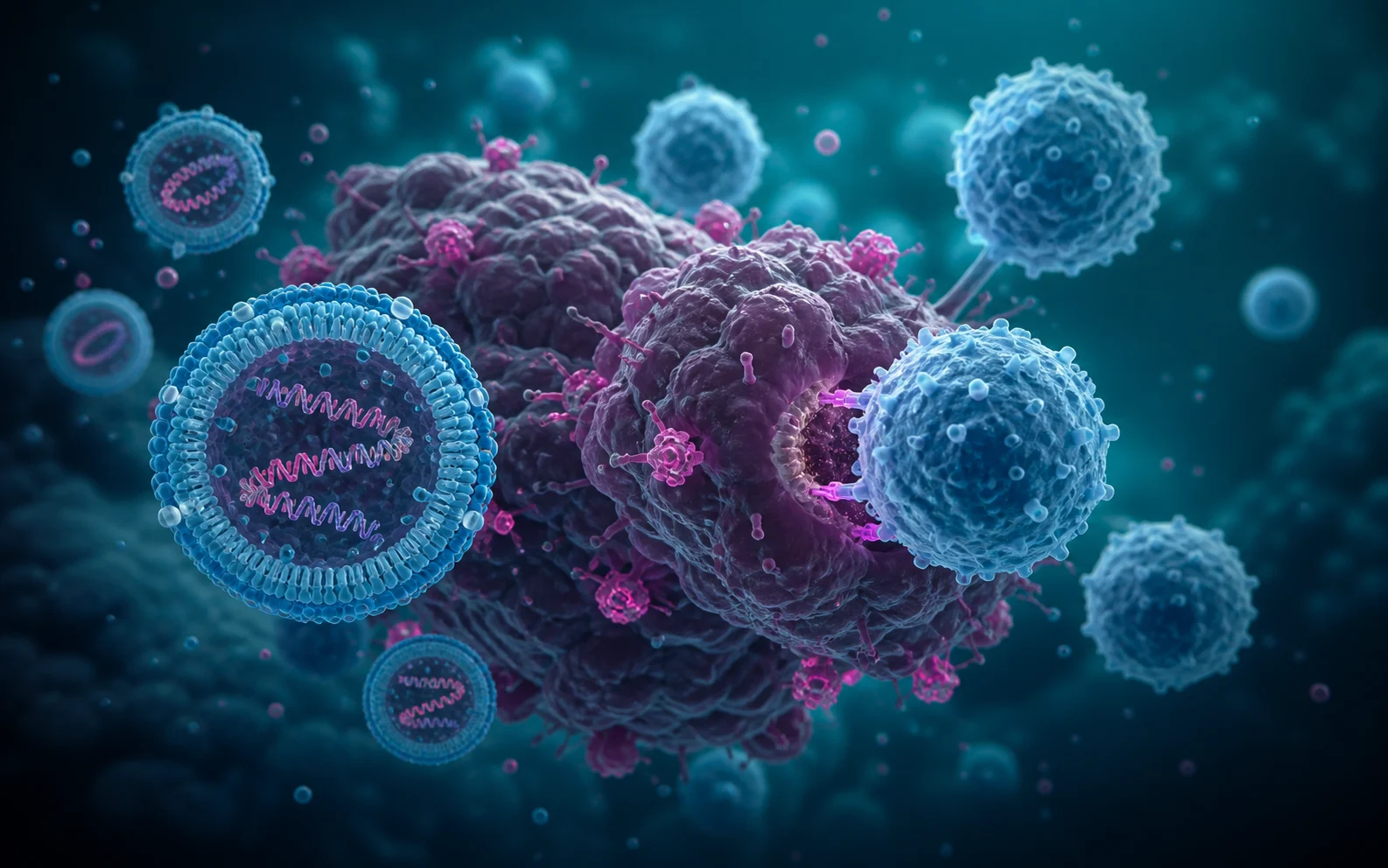
Pancreatic ductal adenocarcinoma, the most common form of pancreatic cancer, is one of the diseases for which researchers are seeking new treatment approaches because it often produces no early symptoms and has a high risk of recurrence after treatment. One recent approach attracting attention is an mRNA vaccine prepared separately for each patient's tumor.
How Was the Personalized mRNA Vaccine Prepared?
In the phase 1 study, researchers examined the cancer-specific changes in 16 patients whose tumors had been surgically removed. They used this information to prepare an individual mRNA vaccine targeting tumor-specific markers called neoantigens. After surgery, patients received the immune checkpoint inhibitor atezolizumab, the personalized vaccine, and modified FOLFIRINOX chemotherapy.
What Did the Study Find?
The vaccine generated strong tumor-specific T-cell responses in 8 of the 16 patients. At a median follow-up of 3.2 years, some vaccine-induced CD8+ T-cell clones remained detectable, and this immune response was associated with delayed recurrence. However, this was a small, early-stage study without a control group; it does not show that the vaccine works on its own or that it cures pancreatic cancer.
Why Does Genetic Analysis Matter?
Instead of giving everyone the same vaccine, this approach identifies molecular targets unique to each patient's tumor. Analyzing the tumor's genetic features forms the basis of the vaccine design and illustrates the role of molecular profiling in personalized oncology.
What Does This Development Mean?
The study provided important evidence that the immune system can recognize patient-specific pancreatic cancer targets over several years. An ongoing randomized phase 2 study will assess whether adding the vaccine to standard treatment delays recurrence compared with standard treatment alone.