
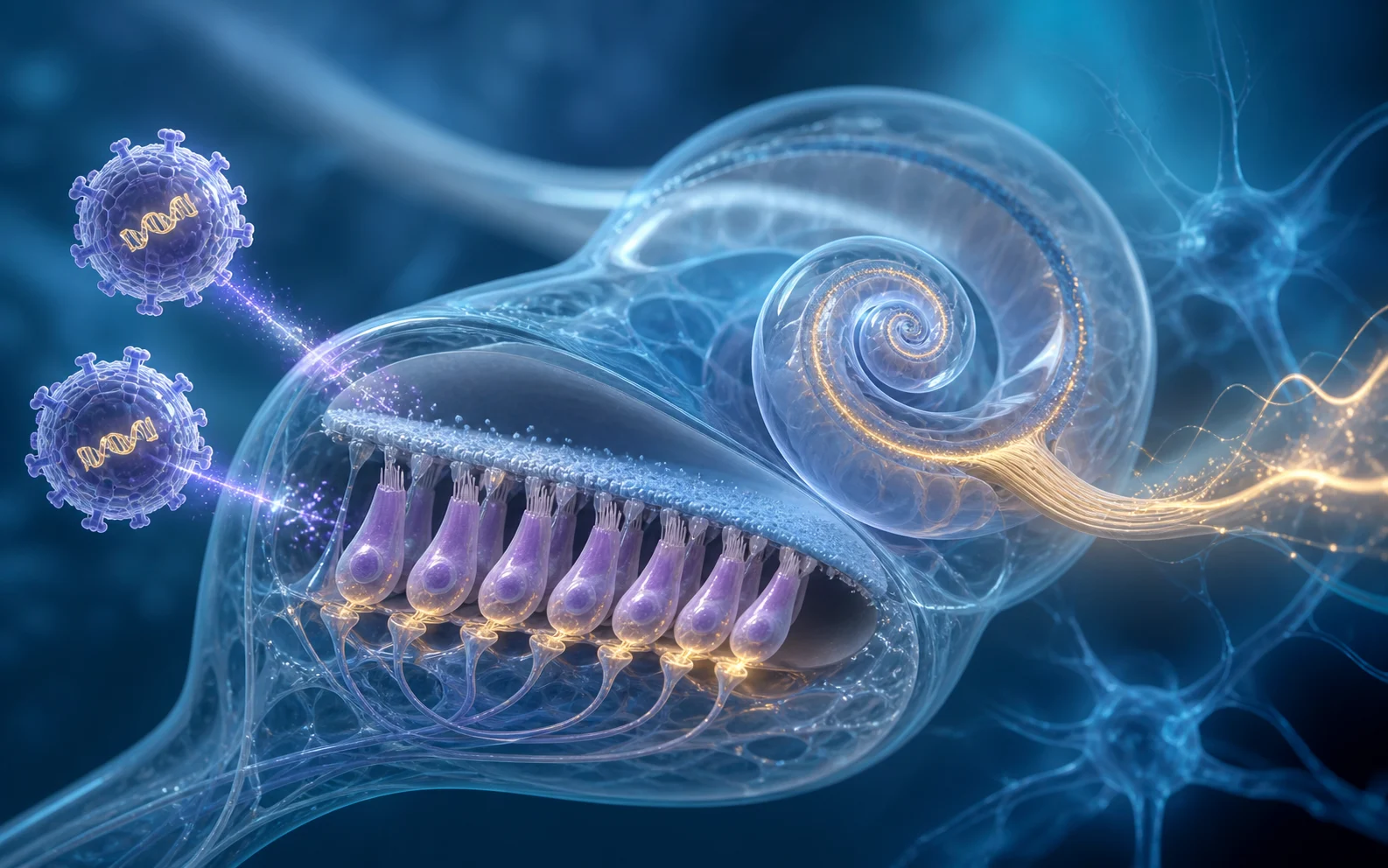
Congenital hearing loss has many genetic causes. One involves changes in OTOF, the gene that encodes otoferlin, a protein needed for sensory cells in the inner ear to transmit sound information to the auditory nerve. Some children with disease-causing changes in both copies of OTOF are born with profound hearing loss.
How Does the Experimental Treatment Work?
The investigational treatment, called DB-OTO, aims to deliver the genetic instructions for producing otoferlin to target cells in the inner ear. Because OTOF is too large to fit inside one viral vector, the genetic cargo is divided between two vectors and designed to reassemble inside the cell.
What Did the Clinical Study Find?
The early, single-arm study treated 12 children with two OTOF variants and profound hearing loss. Nine participants who reached the 24-week assessment met the study's hearing-threshold endpoint, and some were reported to perceive soft speech without assistance.
Why Is Genetic Diagnosis Essential?
Hearing losses that look similar can result from different genes. Before an OTOF-targeted therapy can be considered in research, molecular testing must confirm that OTOF is truly the cause. The findings highlight why identifying the correct genetic subtype can matter for access to treatment studies.
What Does It Mean Today?
The results suggest that inner-ear cell function may be restorable in a specific genetic condition where the auditory nerve remains largely intact. It is not, however, an approved standard treatment or a replacement for current hearing aids, cochlear implants, and specialist care.