

ECEGEN Genetic Services
NIPT (Non-Invasive Prenatal Screening)
NIPT as a screening test: high-risk and no-call results, test scope and contacting ECEGEN.
NIPT: screening and diagnosis
NIPT assesses cell-free DNA in maternal blood to estimate the risk of selected chromosomal conditions. Some of this DNA comes from the placenta. It does not establish a diagnosis; a low-risk result does not exclude all genetic conditions.

Understanding a high-risk result
A high-risk result does not confirm that the fetus is affected. Genetic counselling and specialist assessment help discuss diagnostic options such as CVS or amniocentesis. Pregnancy decisions should not rely on a screening result alone.
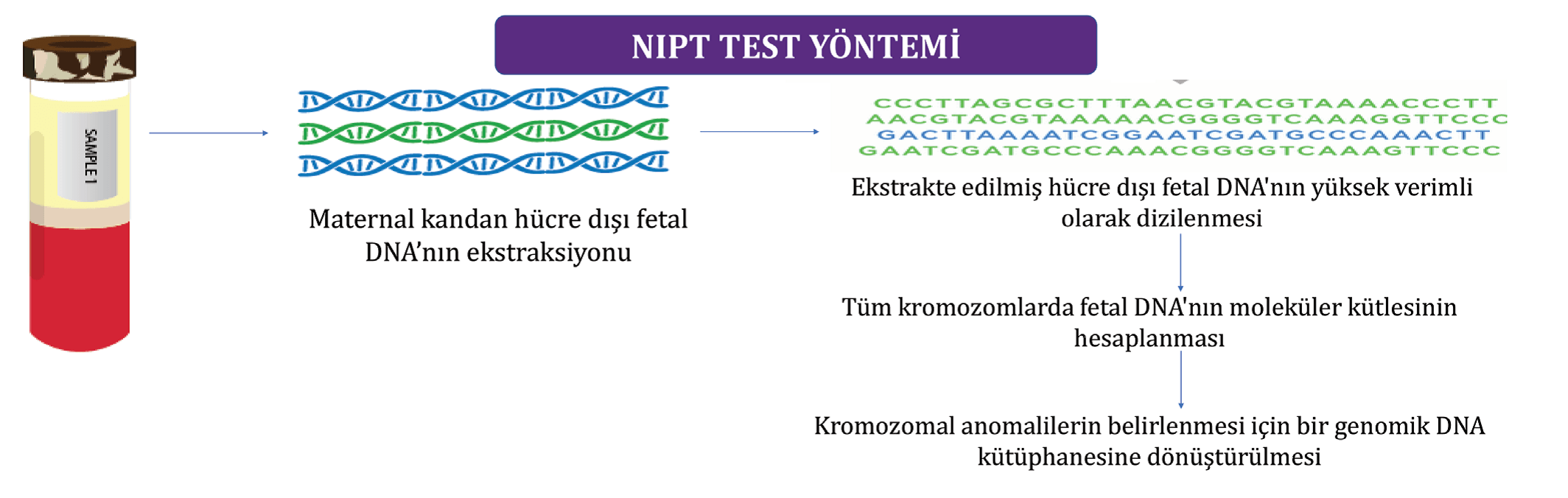
No-call results and low fetal fraction
Low placental DNA fraction or technical factors can prevent a result (no-call). This is not a low-risk result. Repeat sampling, ultrasound assessment or diagnostic options should be discussed with a specialist; a report cannot be guaranteed for every sample.
Scope, suitability and sample requirements
Screening and diagnostic options should be discussed with their benefits and limitations. ECEGEN's panel scope, gestational requirements and suitability for multiple pregnancies or other special circumstances must be confirmed at enquiry. Contact the laboratory before sampling to confirm the tube, volume, transport, expected turnaround and fee.
Discuss prenatal screening and diagnostic options with a specialist. Suitability depends on the pregnancy, clinical assessment and test scope. NIPT is a screening test; high-risk and no-call results require further assessment.
References
Would you like to get information about this service or request a test?